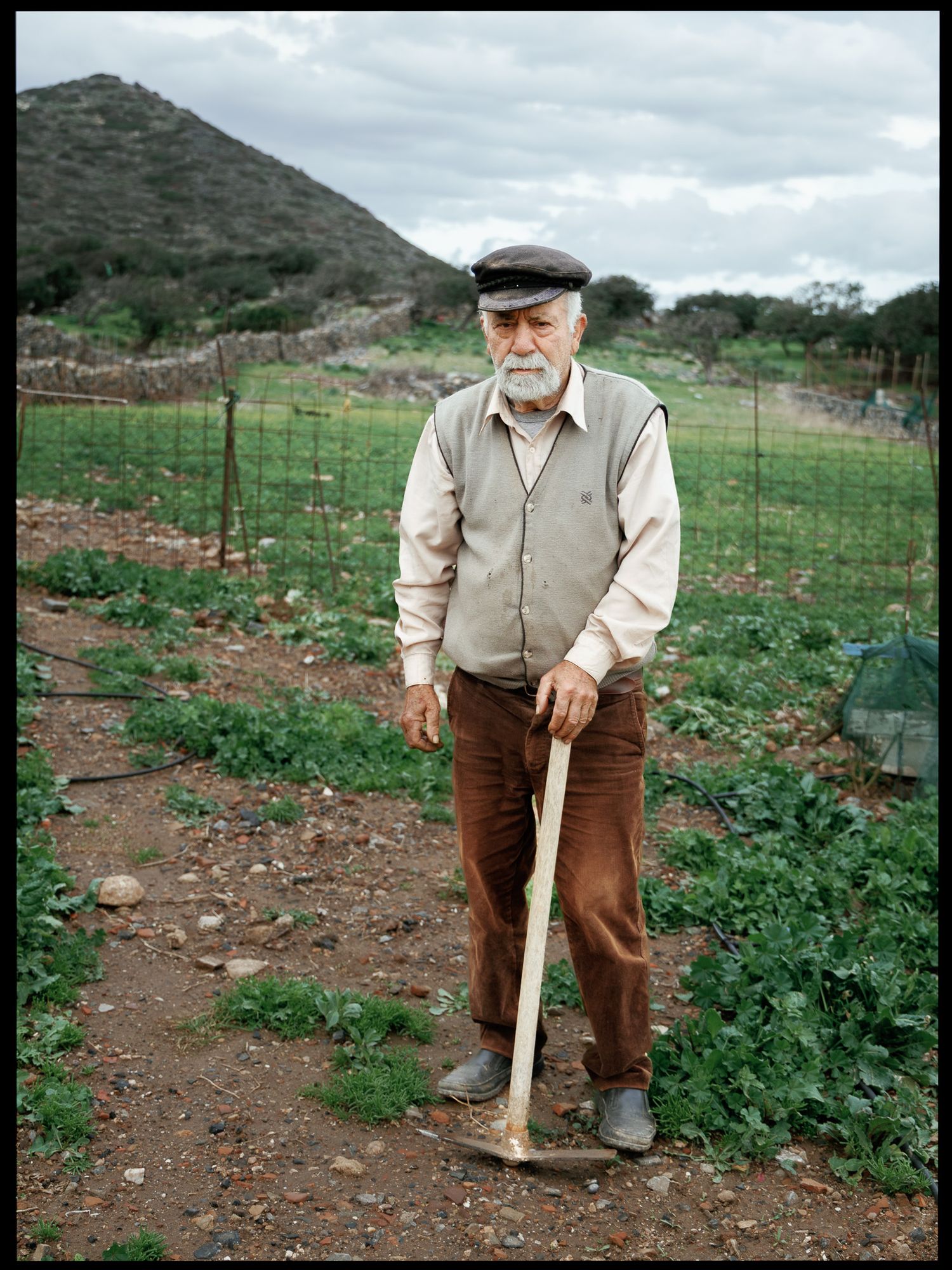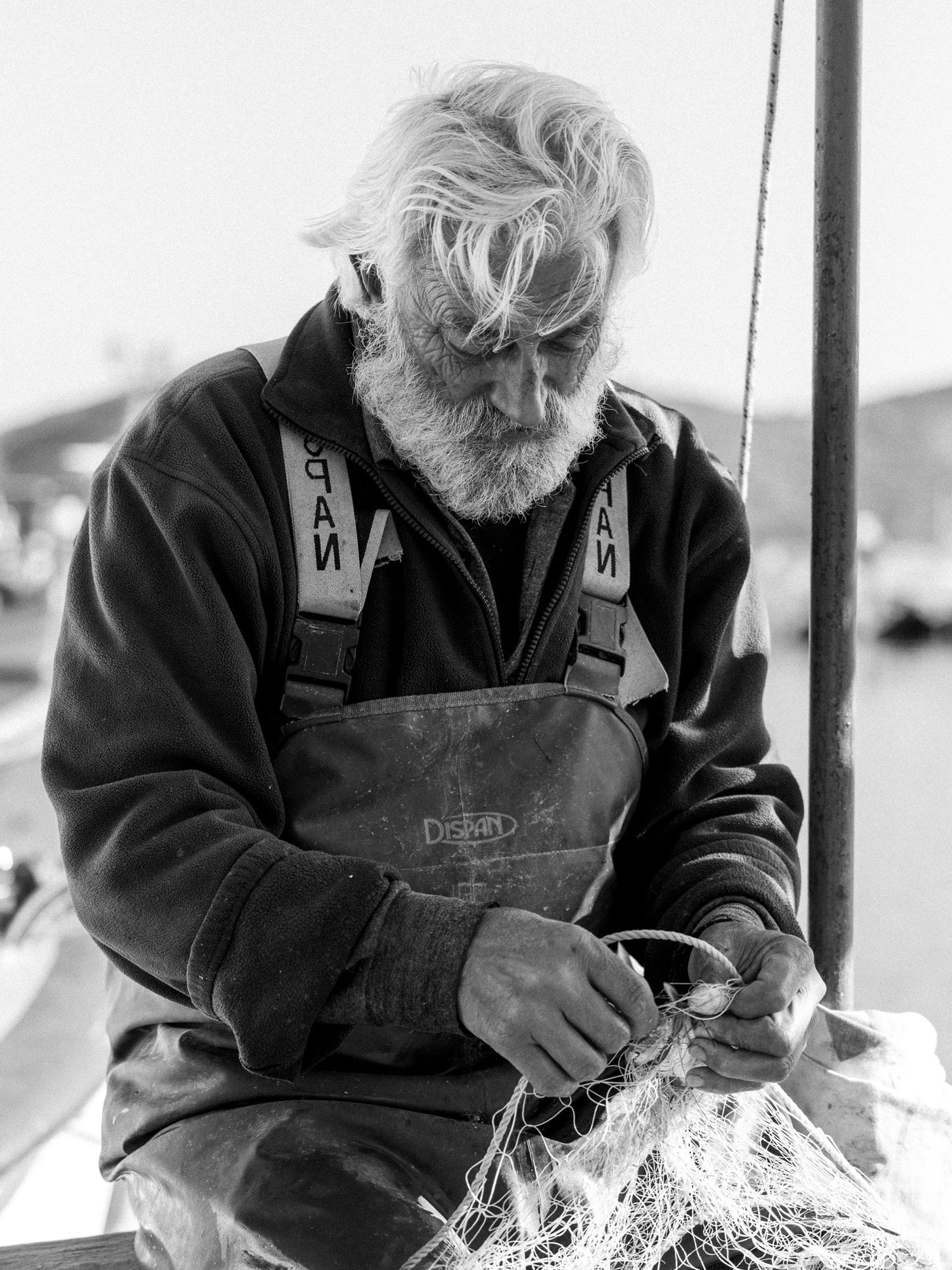
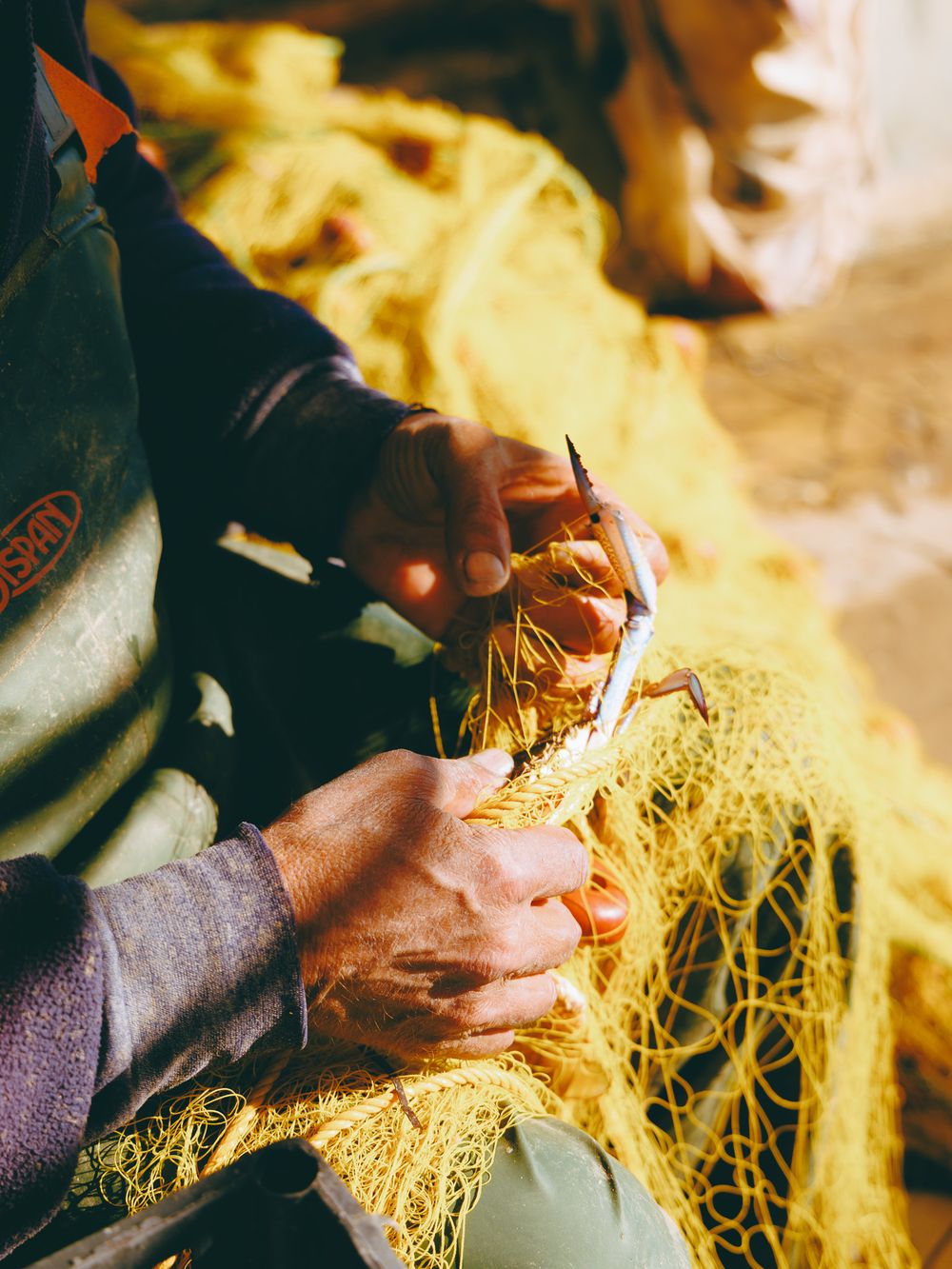
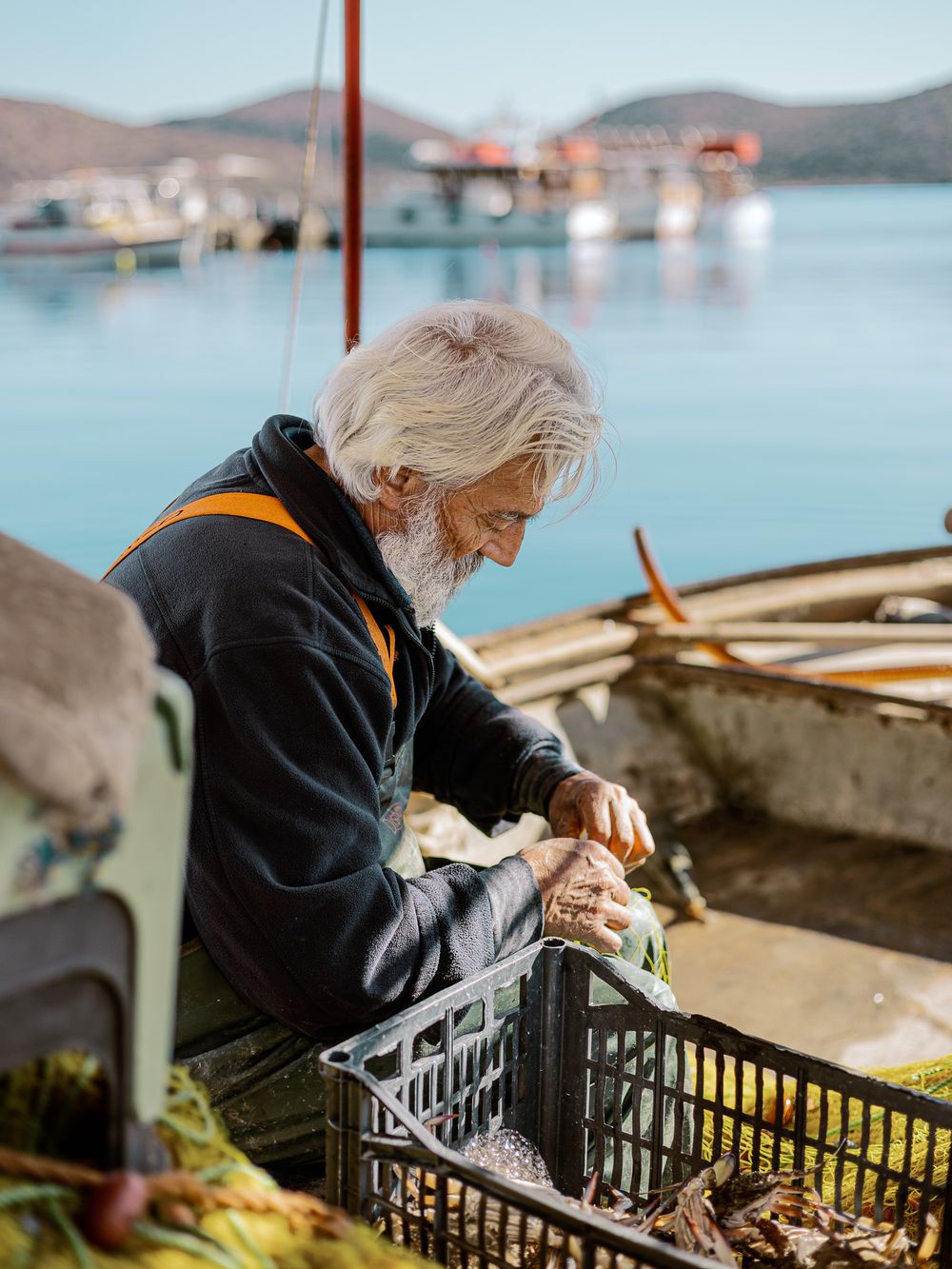
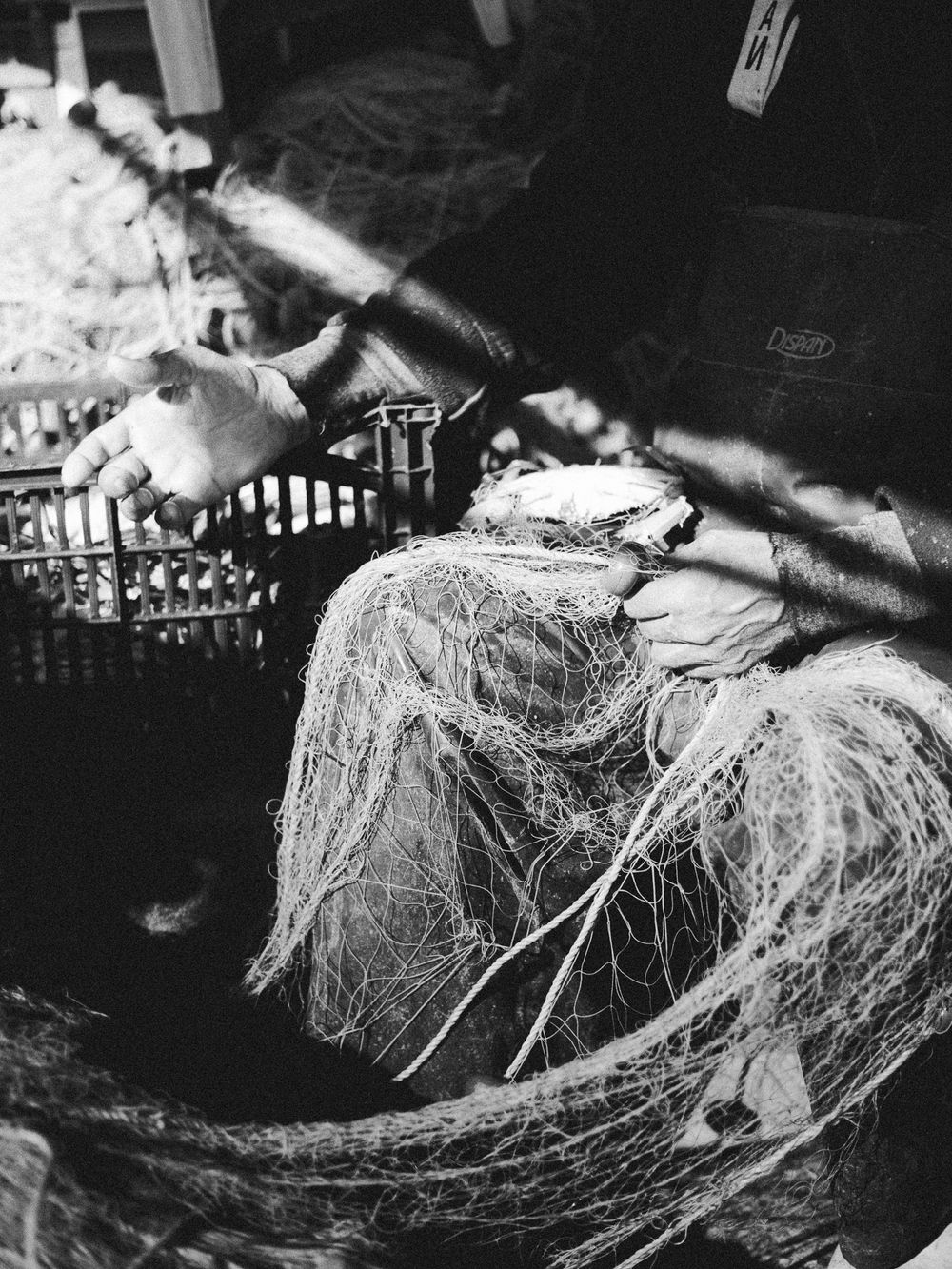
There was nothing rushed about him. No show. No performance. Just steady hands and quiet focus, untangling yellow nets as the morning light laid softly over the harbour.
Mr Vaggelis has spent most of his life at sea. Fishing these waters long before they became postcards. Long before visitors admired the stillness of Elounda from a distance. When I approached him, he welcomed me without hesitation — calm, warm, generous in that rare way that feels effortless.
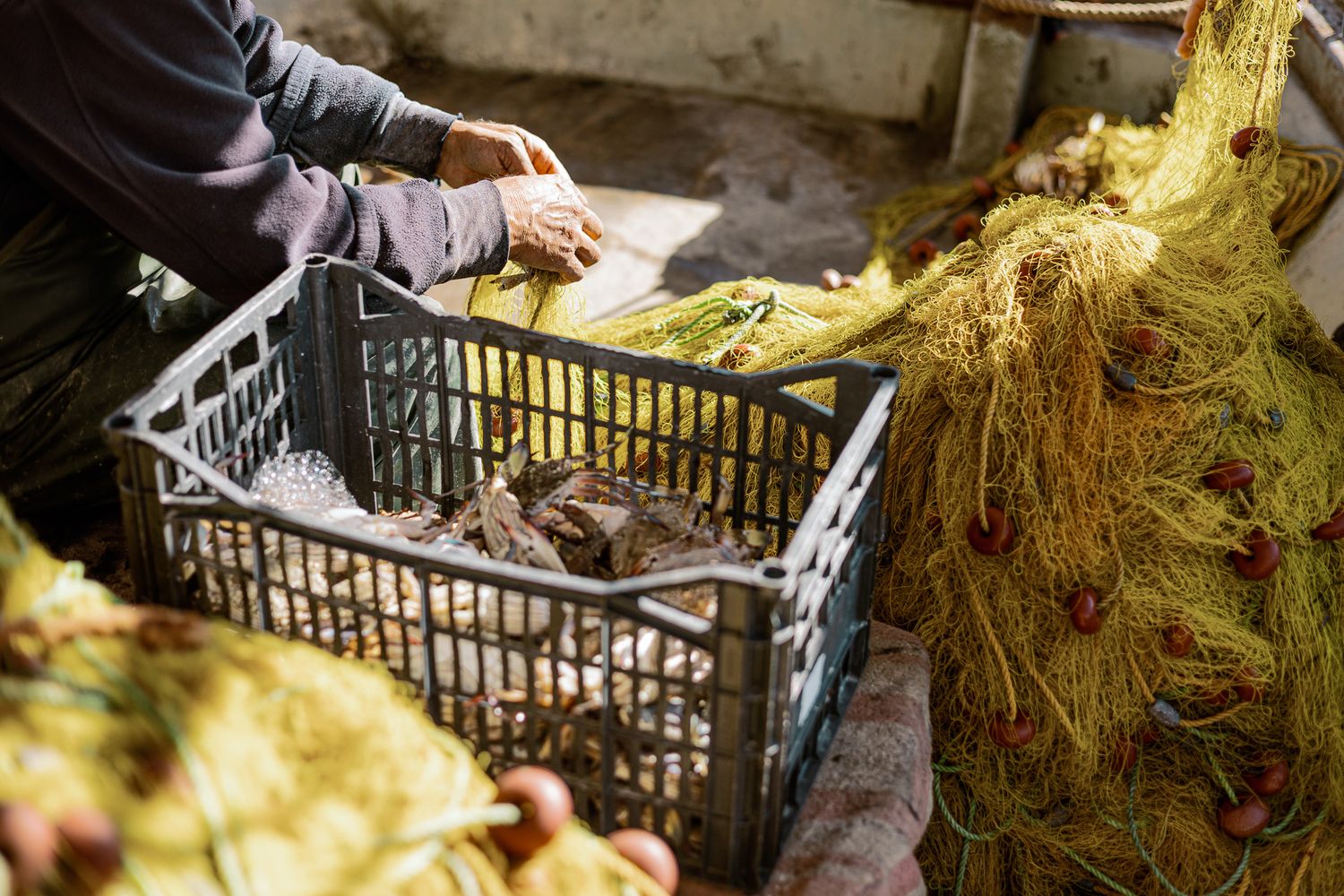
We sat together on his boat while he cleaned the nets. Every movement precise. Measured. Almost ceremonial. The kind of rhythm that only time teaches.
At one point, I asked him what the sea means to him. He paused for a second, looked towards the horizon and said simply:
“You have to respect it.”
Not romantic. Not dramatic. Just true.
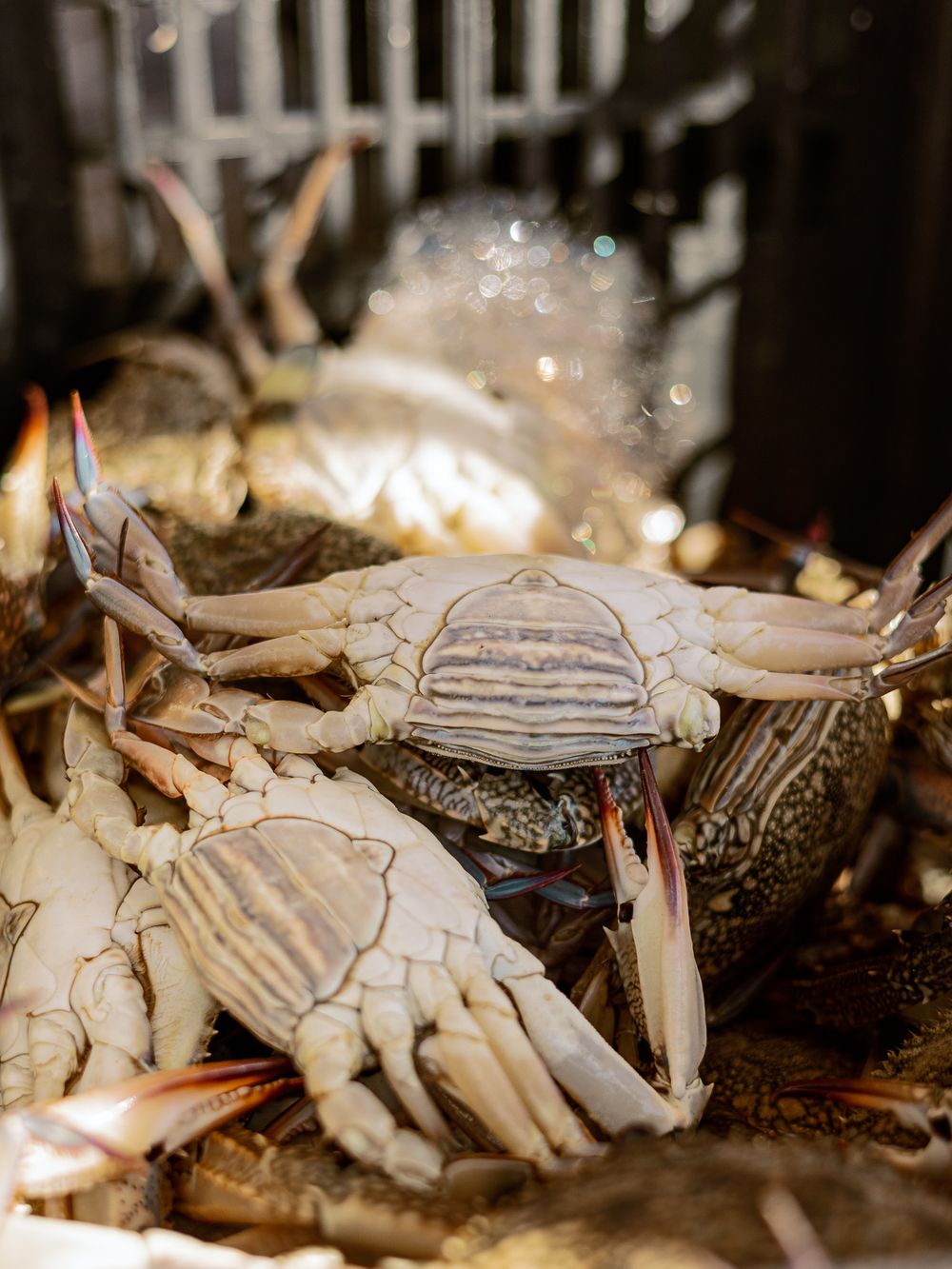
He spoke about his work, about the fish of these waters, about the seasons and their moods. About what comes and what disappears. About patience. And somewhere between stories about tides and mornings, he started sharing recipes — how he cooks crab, how he prepares seafood.
I photographed quietly. He kept working.
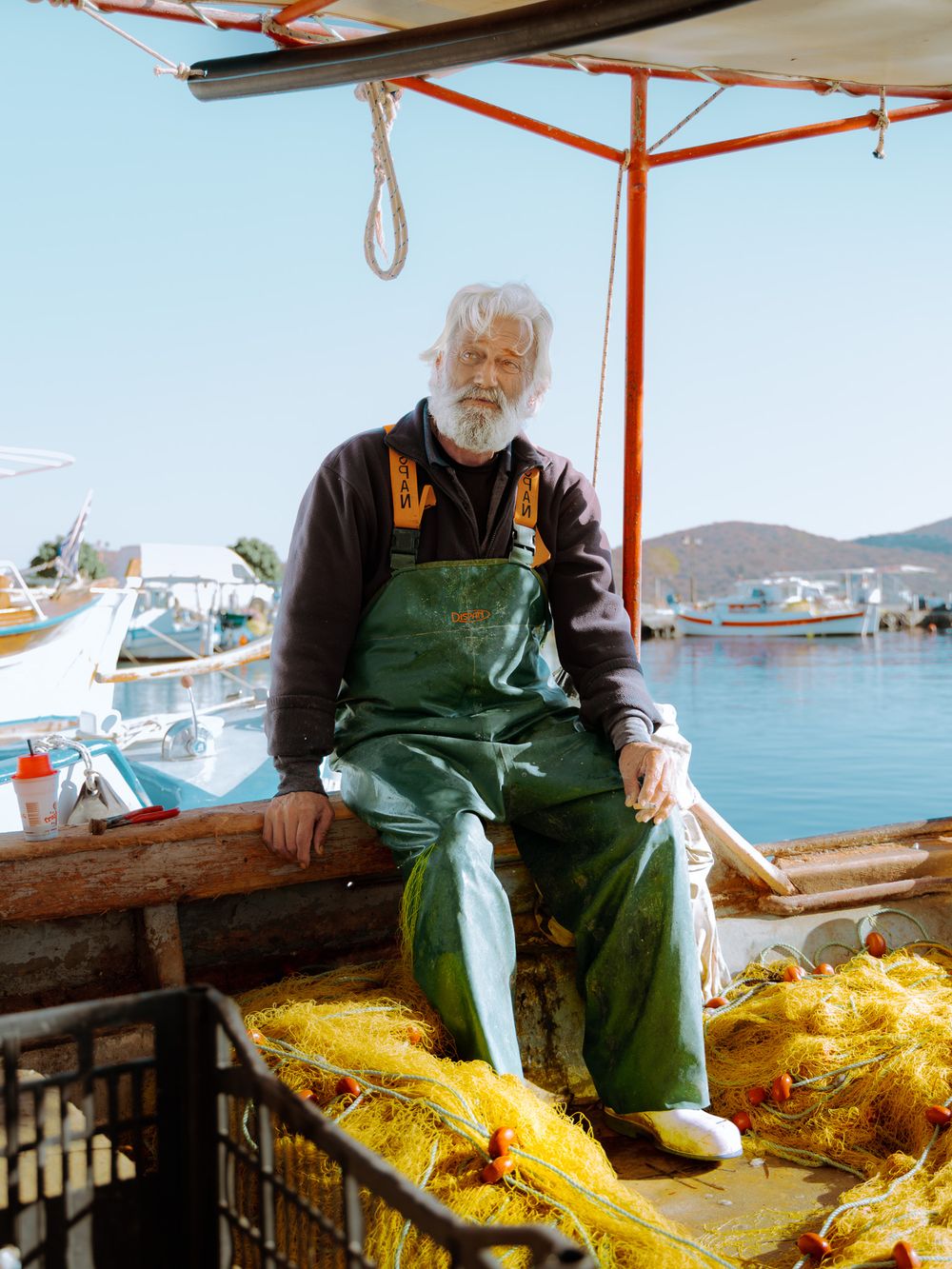
At some point, curious about how he sees life here — on the island, in Greece, by this quiet edge of the sea — I asked him if he ever thought of a different path.
He didn’t answer right away. He lifted his gaze briefly, towards the sun hanging low above us, the southern wind brushing softly against our faces, and with a faint, almost grateful smile, he said:
“This, I wouldn’t trade for anything.”
A simple sentence. But it held everything.
Not pride. Not nostalgia. Just a quiet acceptance of a life shaped by salt, weather, routine and respect.
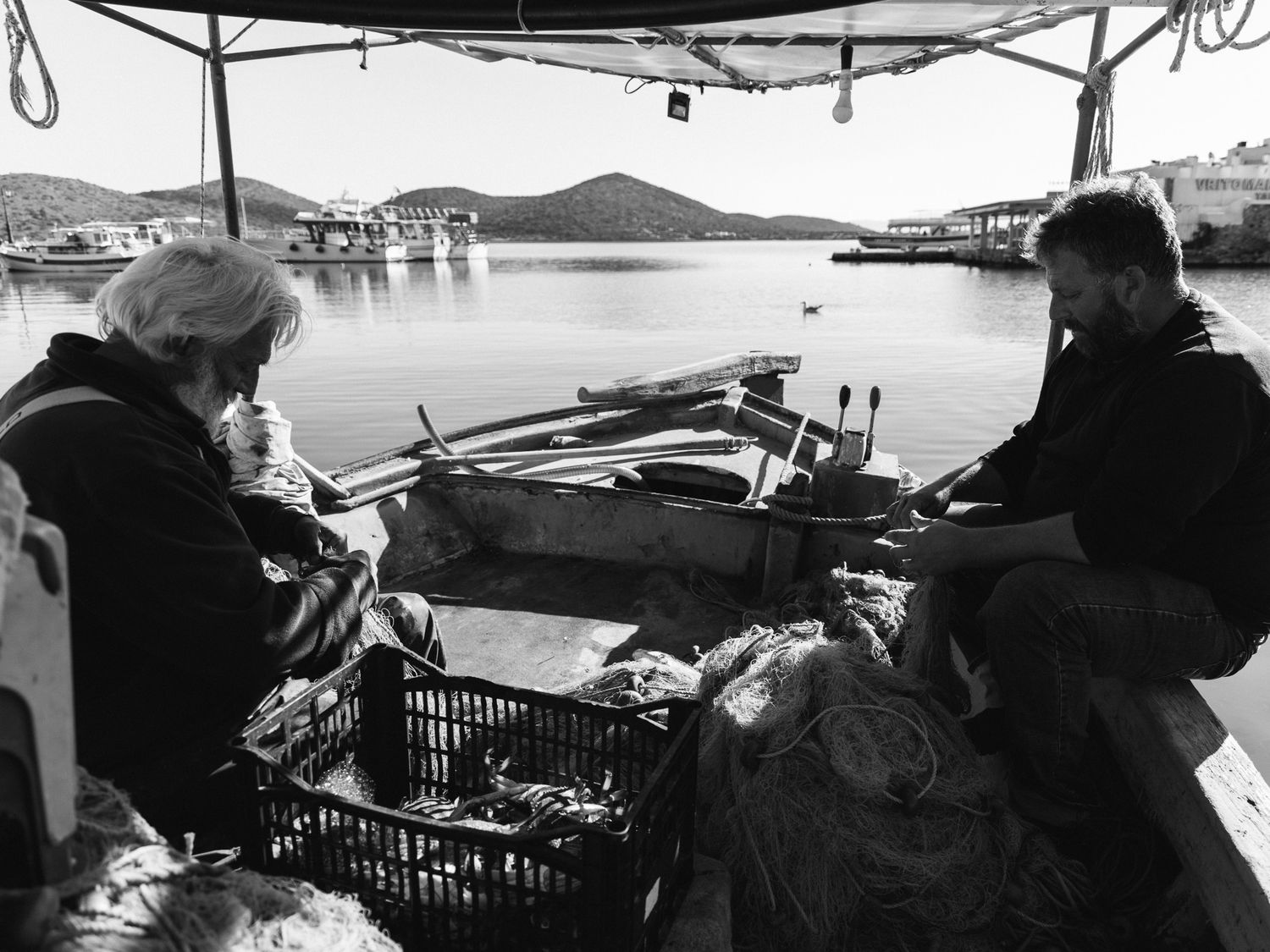
The nets moved through his hands like memory. Salt lived in the lines of his face. And there was a strange peace in the way he existed within this small frame of sea, wood and sky — as if he had already made peace with everything it could offer or take away.
This wasn’t just a portrait of a fisherman. It was a moment with a man who understands the sea, because he has spent a lifetime listening to it.
And maybe that’s what stays with you the most. Not the boat. Not the catch. But the silence between words. And the respect in his voice when he speaks about the water.